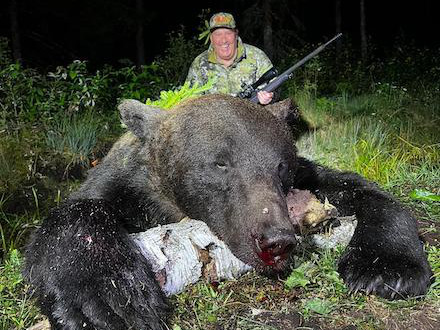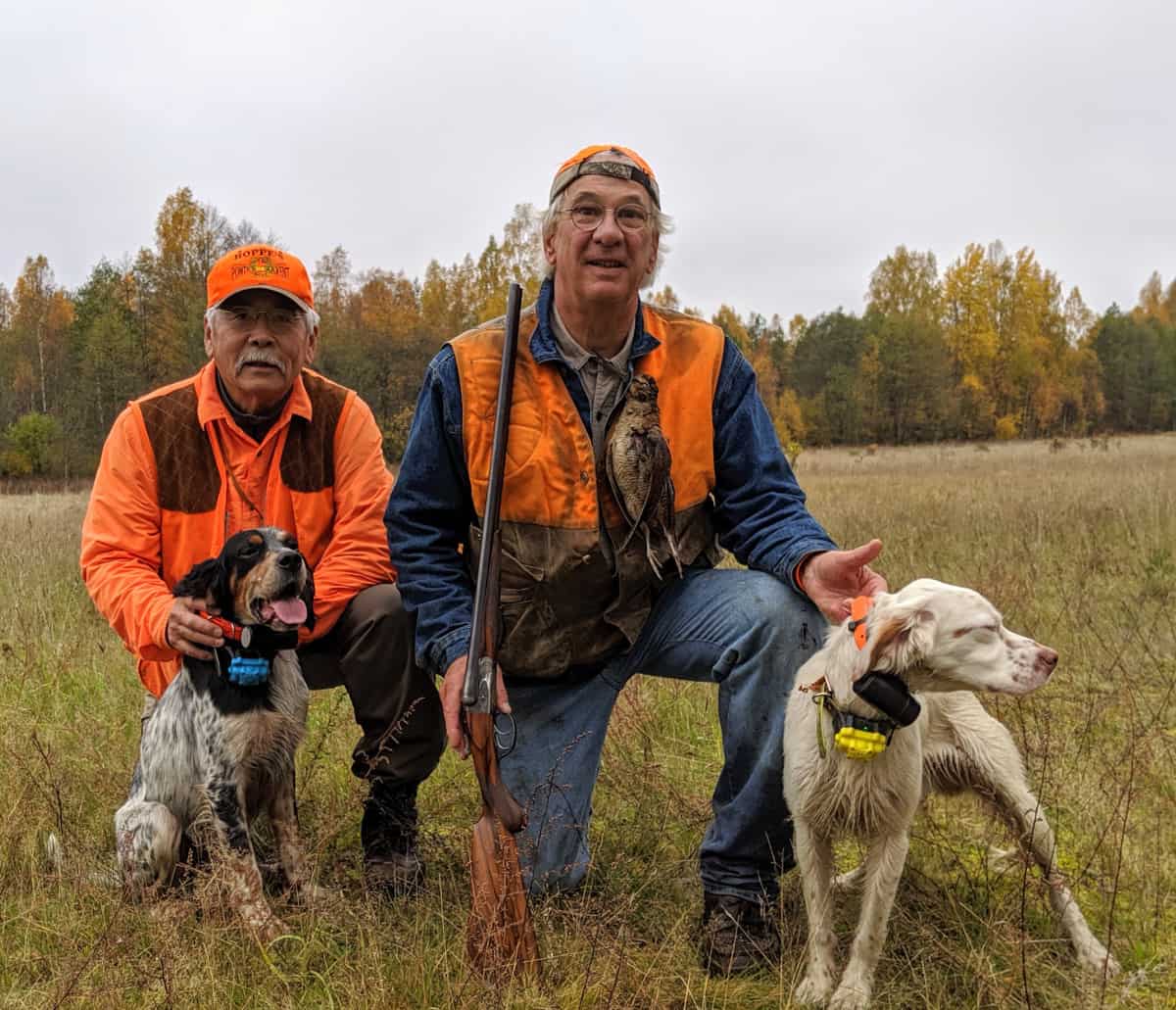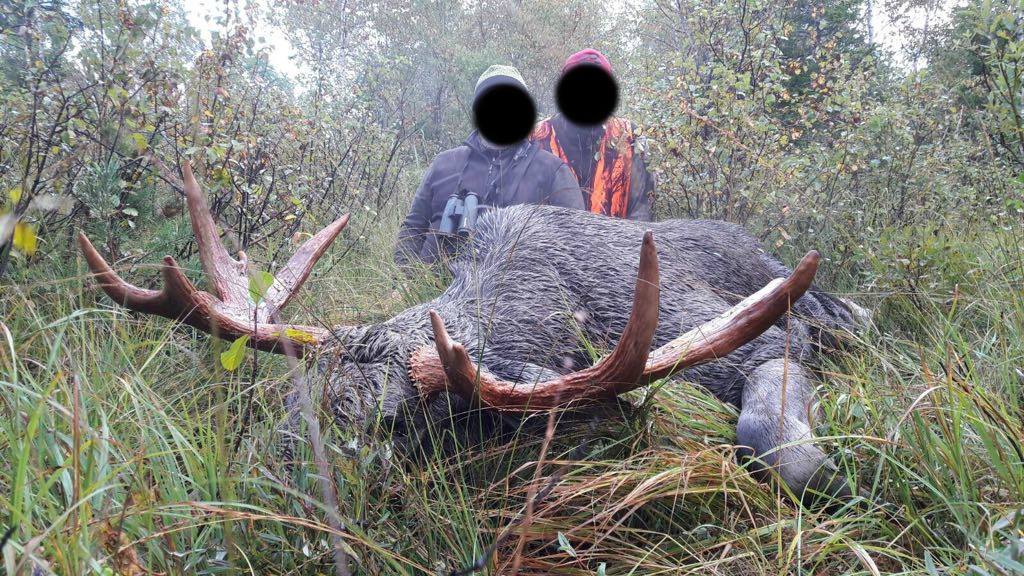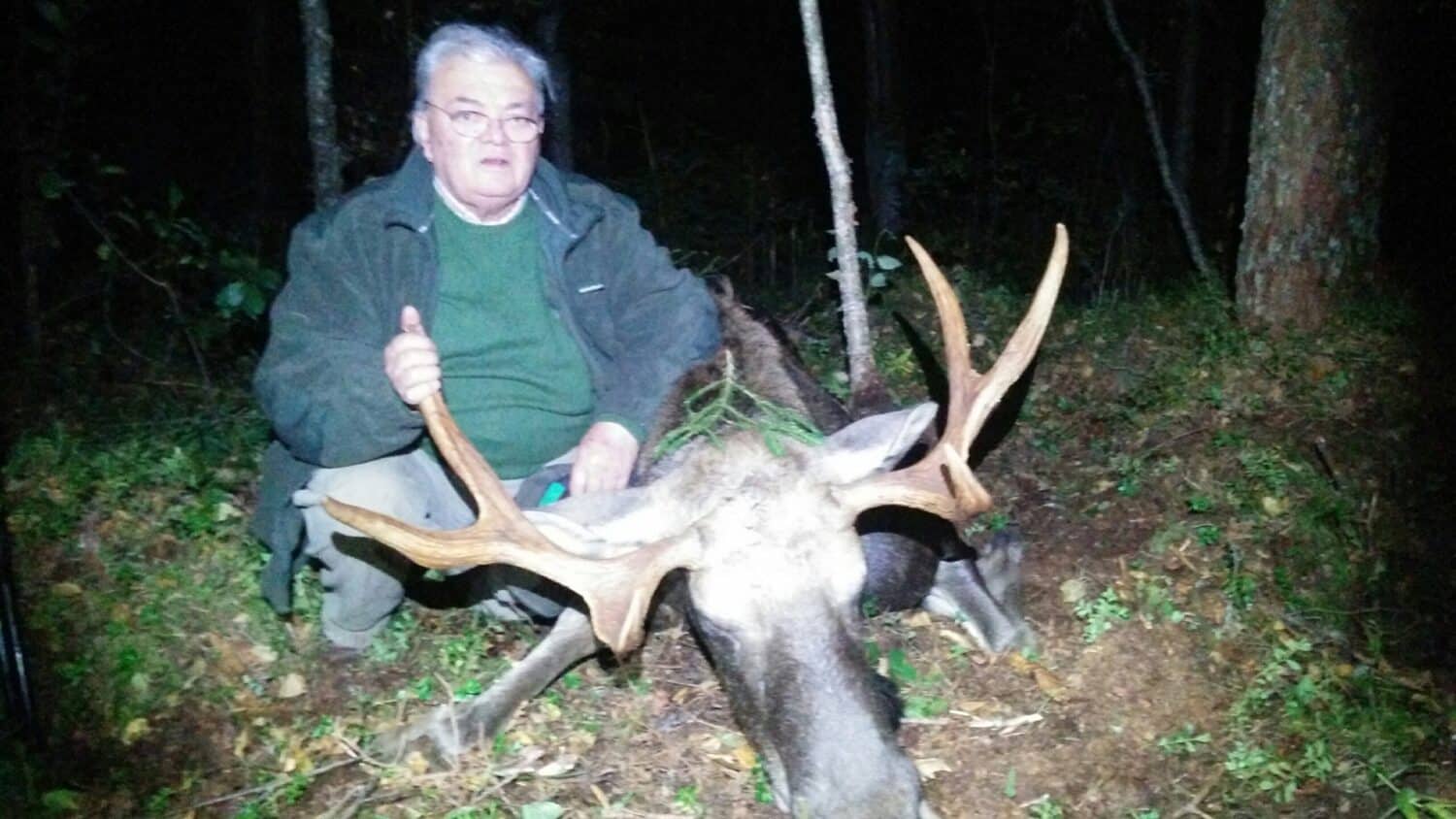
Brown Bear Hunting in Estonia
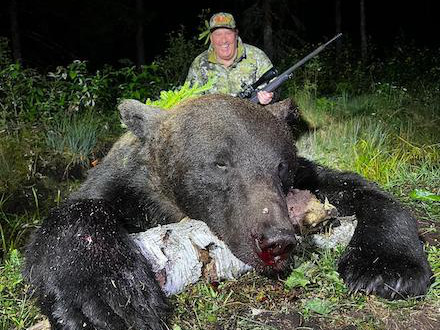
The largest bear population is found in the Viru district where we have our hunting areas, although there is also a very high density in the rest of Estonia.
To have certain guarantees in bear hunting, 3 to 5 hunting days are necessary. It is necessary to book bear hunting with sufficient advance notice; 2 months is recommended. Check the requirements and necessary documentation to hunt in Estonia.
Bear hunting in Estonia is done from high seats over bait sites.
The best hunting period is August where we have had a 100% success rate over the last 12 years.
Currently, more than 900 bears are present in Estonia, and their number is growing significantly. Each season approximately 50 bears are hunted and our organization hunts about 10 per year, mainly in August and the first part of September.
Brown Bear Hunting from Stands
Stand hunting is the only method of bear hunting permitted in Estonia. Hunting takes place in our hunting areas where we have bait sites specifically created for bear hunting that are fed from early April until the end of October. From late September, bears may also visit oat fields.
How the Hunt Works
Stand hunting for bears takes place over bear bait sites and oat fields, and shooting is done from high seats prepared to hide the hunter from the bear's sight and smell. The hunter must wait patiently from 6 PM and may need to spend up to 8 hours on the stand.
The best date for stand hunting bears is August where we have 100% success, and during these dates shooting is done exclusively on bait sites in the forests. At the end of September, bears may visit oat fields where we have high seats located for hunting.
With 5 days of stands, there are normally at least 2 or 3 bear specimens on the bait site and the shooting distance does not normally exceed 60 meters. It is recommended to use the highest caliber the hunter is comfortable with and always use appropriate bullets for this hunt.
Characteristics of Bear Hunting from Stands
During hibernation months, the bear loses a lot of weight and needs to recover it quickly to be able to survive hibernation again. To gain weight, the bear always looks for areas where food is not scarce, so if the bait site is kept well stocked and appropriate food is used, there are normally not many problems for the bear to acquire a habit that becomes lethal.
From June until mid-September, the bear goes to the bait sites almost every day and then combines feeding at bait sites with sporadic visits to oat fields mainly.
The best dates for hunting are from August 1 to September 15.
At the bait sites, we have trail cameras so the hunter before arriving in Estonia will receive photos of the bears that are entering the bait sites so they can more or less get an idea of the size and physiology of the bears.
Information about the Brown Bear (Ursus arctos)
Ursus arctos is an omnivorous mammal that belongs to the bear family. It is the most widespread bear species on the planet and they normally live between 25 and 30 years.
Physical Description
Their length can reach up to 3 m and their height 1.30 m. Their weight can reach up to 600 kg. Color varies according to the specimen. They walk on four legs but are among the few animals capable of standing on their hind legs (plantigrades) although they do not normally do so, only when they feel threatened. They have excellent hearing and an excellent sense of smell that allows them to detect food at long distances and that helps them during the mating period to understand the sexual state of other specimens. Males are heavier and more robust than females.
Distribution and Habitat
They are found in Europe, Asia, and North America. They normally live in mountains, alpine meadows, and near rivers.
Diet
These bears are omnivores. They feed mainly on plants, although also on carrion. Their life in general is defined by feeding. During winter they hibernate in dens they build themselves due to lack of food. Some of them, those who live near rivers or lakes, eat a lot of fish, but in general their diet is largely composed of berries, mushrooms, roots, and shoots.
Reproduction
Females reach sexual maturity between 3 and 5 years. Males later, due to high competition with other males. The mating period runs from May to July. The pair will stay together for one season. Females delay gestation until autumn and give birth two months later, in the middle of hibernation. This gives security to the cubs, who will not leave the den until the end of winter. Normally, she-bears give birth to between one and three cubs that will stay with her for approximately a year and a half. Cubs at birth weigh about 350 g.